Thursday, April 19, 2012

Stellar Alchemy - how the chemical elements were synthesised -

The Cosmos is within us, we're made of star-stuff - Carl Sagan (Astronomer, 1934-1996)

Have you ever considered that every atom in your body came from stars? Everything living and non-living thing and every part of you and me were forged in the grand life of stars. The carbon atoms in your right hand probably came from a different star than your left hand. We wouldn’t be here if stars hadn’t lived, died and exploded, and as they did so, fusing together atomic nuclei and building the elements - carbon, nitrogen, oxygen, sulphur, iron, all the things that matter for life to get started on earth. Every atom in our bodies was once part of something else. Everything is made of the same basic ingredients called the chemical elements, the building blocks of the universe. Written in every atom is the history of the universe.

Start with a Bang

Hydrogen and helium were generated in the first few seconds of the Big Bang. Hydrogen being the most basic of the 92 naturally occurring chemical elements as it consists of only one proton and one electron. The coalescing of four hydrogen atoms at enormous pressures and temperatures within stars generates a helium atom which consists of 2 protons and 2 neutrons. In the synthesis of helium from hydrogen, there is a loss in mass which is converted to energy (heat and light) and is described by Einstein’s eloquent equation, E=mc2. In a stellar fusion reaction, the nuclei of two atoms join to form a single atom of a different element. Helium is therefore the source material for the creation of heavier and heavier atomic nuclei. The sequence of building heavier elements from a helium nucleus proceeds in this sequence:

1. 2 protons + 2 neutrons = 1 helium nuclei.
2. Then the combination of 2 helium nuclei forms the element beryllium.
3. Following this, 2 beryllium nuclei + 1 helium nuclei gives carbon.
4. Then, 4 helium nuclei would give oxygen, 5 helium nuclei would give nitrogen, 6 helium nuclei would give magnesium, 7 would give silicon and 8 would give sulphur, and so on.
However, this only works for elements as heavy as iron or less. This is because creation of elements heavier than iron requires additional energy rather than the production of energy. Therefore there needs to be another mechanism to explain the generation of nuclei heavier than iron in stars.

Stellar Alchemy

When a star runs out of hydrogen it begins to die and collapses in on itself creating pressures and temperatures high enough to overcome nuclear forces which allow helium nuclei to fuse together to make atoms of heavier nuclei. Collapsing stars do not go out with a whimper, but explode in one of the most energetic events in the Universe, to produce a cloud rich in atoms of heavier atomic nuclei. These events are known as supernovae and are the final phase of element creation. The energy flux is so great during a supernova event, that all of the naturally occurring elements above iron (cobalt to uranium) are synthesised by the relentless pelting of atomic nuclei with neutrons. This highly energetic environment promotes the synthesis of elements heavier than iron, only now, nuclei are not fused together as in a fusion reaction, but the heavier nuclei undergo nuclear fission. Iron is converted to cobalt, which in turn is converted to cadmium, then, indium, tin, antimony and so on, including gold.

The stars died so that you could be here today - Lawrence Krauss (Physicist 1954 - )


The stuff we are made of

Hydrogen and helium were produced in the Big Bang, and heavier elements were created later by stars and scattered into space by stellar supernovae. There, in the spaces between the stars, these elements mixed with interstellar gas and became incorporated into subsequent generations of stars. The remnants of the stellar explosions coalesced to form the rocky and giant gas planets in our solar system. All 92 naturally occurring elements were incorporated into our planet during its accretion some 4.5 billion years ago. Water, essential to biology, is made of one atom of oxygen and two atoms of hydrogen. Next time you drink a glass of water, consider that you are imbibing hydrogen, which is 13.7 billion years old and also the most abundant element in the Universe. We inhale oxygen and iron-bearing haemoglobin carries this oxygen through the bloodstream. Chains of carbon, nitrogen, oxygen and phosphorus form the support structure for proteins, fats, and carbohydrates in our cells. Calcium strengthens our bones, while potassium and sodium ions are a conduit for impulses through the nervous system. The essential elements for biology on the early earth made it possible for life to start and for the eventual propagation of living species through Darwinian natural selection.


Our Cosmic Connection

The stars seem far detached from our everyday lives, but they are connected to us in the most profound way possible - none of us would be here if stars hadn’t been born, lived their epic lives and died in a dramatic way.


Figure 1: The Periodic Table of the Elements. Elements heavier than hydrogen are synthesised in the hearts of stars by the fusion of lighter atomic nuclei. Elements heavier than iron are made by nuclear fission in supernova eruptions. Image taken from: http://www.elementsdatabase.com/


Figure 2: The hydrogen making up the water in this glass would have been created in first few nanoseconds of the Big Bang and is therefore as old as the universe itself, 13.7 billion years.


Figure 3: The element iron is the last in the sequence of elements formed in stars. Massive deposits of iron oxide at Vergenoeg open pit mine. Picture: Bruce Cairncross


Figure 4: Every atom on Earth would have been made in the Universe's
infancy and in supernovae events. Picture: Allan Fraser


Figure 5: Gold is one of the heavier elements produced by nuclear fission in highly energetic supernovae events. This specimen of gold is 10.5 cm (9.5 oz.) and from the Vogelstruisbult mine, Witwatersrand goldfield. Picture: Bruce Cairncross.

Bibliography

1. Delsemme, A., (1994), “Our Cosmic Origins – from the Big Bang to the Emergence of life and intelligence”. Cambridge University Press.
2. McSween. H.Y., (1997) “Fanfare for Earth – the origin of our planet and life”.

Saturday, January 14, 2012

Ages of Rock, Rock of Ages

Tracing Earth's Oldest Rocks

By Allan Fraser

How old is planet earth? Our Solar System formed from a vast cloud of gas and dust 4.65 billion years ago. The age of 4.65 billion years is well established from the decay rates of radioactive elements found in meteorites and rocks from the Moon as well an abundance of evidence from chemistry and physics. As Earth is a dynamic planet in which rocks are continuously being recycled by plate tectonics much of the primordial material from the time of the formation of the Earth is no longer around. If there are any of Earth's primordial rocks left in their original state, they have not yet been found. The oldest rocks found to-date on Earth are those of the Nuvvuagittuq greenstone belt and these give an age of 4.3 billion years. It was not until relatively recently that it has been possible to measure the age of rocks. The early ideas of the age of the Earth date to the ancient Greeks and Romans and it was not until the late 1700s that scientists begun to realise that the Earth was indeed ancient. However, it was not until the discovery of radioactivity and the invention of the mass spectrometer that the quantification of isotopes of various radiometric decay schemes could be performed. In recent decades improvements in detector technology and electronics in mass spectrometers has resulted in an improvement in the precision of analytical data translating to an increased confidence in the radiometric ages. The use of hyphenated analytical techniques such as laser ablation - mass spectrometry has also allowed the analysis of small sample sizes and individual crystals.

In the Beginning

The ancient Greeks and Romans realised that long time spans were required to lay down the thick layers of sediments observed and from this they estimated that the Earth was thousands of years old. But it wasn't until the late 1700s that scientific interest in geological age began when Scottish geologist James Hutton (1726-1797), who observed that sediments built up on landscapes were indeed indicative of an old Earth (Dalrymple, 1991). Before then, the Bible had provided the only estimate for the age of the world. Bishop James Ussher (1581 – 1656) established the time of “creation” to 6000 years. Using the book of Genesis as a history book, Ussher meticulously examined the genealogy of the Bible and concluded that the date of the creation as the night of Sunday, 23 October 4004 BC (McSween, 1997). Today some biblical scholars, as well as a number of literalist evangelical Christians, believe in a literal interpretation of the Bible calling for a 6000-year-old Earth (Barr, 1984). In 1785 Hutton published ‘Theory of the Earth’ in which he concluded that “slow” processes shape the Earth, mountains arise continuously as a balance against erosion and weathering and the physical and chemical laws that govern nature are uniform. Most geological processes are extremely slow, and evidence for slow change was everywhere; rivers eroded rock and rain inexorably wore away the tops of mountains and the slow movement of glaciers carved out entire valleys. Hutton and other contemporary scientists of the time concluded that the single most important factor why the Earth looks like the way is does was due to time, and lots of it. With this Hutton established the ‘Doctrine of Uniformitarianism: "Present is key to the past" (Ward, 1995). Hutton used fossils to establish relative ages of rocks. There was however a need to determine the absolute age of the Earth. In the late 19th Century this question was first addressed by William Thompson (Lord Kelvin, 1824 - 1907). Kelvin assumed that the Earth was originally molten and calculated a date for the age of the Earth using the then young science of thermodynamics. His calculation was based on the cooling of the Earth through conduction and radiation of heat. Kelvin’s age of Earth was calculated to be about 24-40 million years (Ward 1995). The problem with this view is that the Earth has an internal heat source from radioactive decay – a fact not known to Lord Kelvin at the time of his estimation of the Earths age. At around the same time, John Joly (1857 – 1933) calculated the rate of transfer of salt to the ocean as a means to determine the age of the Earth. The age of Earth by this method was calculated to be 90-100 million years. The main problem with this approach was there was no means to account for recycled salt, salt incorporated into clay minerals and salt deposits. Later work by other scientists used the thickness of total sedimentary record, to determine an age of 500 million years. It was not until the discovery of radioactivity by Henri Becquerel in 1896 that geologists had a tool for determining the age of rocks and ultimately the age of the Earth (Dalrymple, 1991).


Figure 1: William Thomson, (Lord Kelvin) (1824 – 1907). Kelvin assumed that the Earth was originally molten and calculated a date for the age of the Earth using the science of thermodynamics. Source: Wikipedia.org


Figure 2: James Hutton (1726-1797). A Scottish farmer and naturalist, is known as the founder of modern geology. Source: Wikipedia.org


Figure 3: Ernest Rutherford (1871-1937). A New Zealand-born British chemist and physicist who became known as the father of nuclear physics[2] In early work he discovered the concept of radioactive half-life, proved that radioactivity involved the transmutation of one chemical element to another. Source: Wikipedia.org

Nuclear Changes in Nature

The solid rock of the Earth’s lithosphere formed from molten material that cooled and hardened. And in this process a “clock” that gives the age of the rock was going. Within the molten rock there are trace amounts of uranium-238, a radioactive element. Once the rocks had cooled this element was firmly locked in the rock. The atoms of uranium-238 however, decay at a constant rate to form atoms of lead-206 which would also be sealed within the solid rock. With the passing of time the rock would have less and less atoms of uranium-238 and more atoms of lead-206. Therefore, the rock contains some of the original amount of uranium-238 and the decay product, lead-206. Since we know the rate at which uranium-238 decays to lead-206, and the amounts of each of these atoms remaining we can calculate the age of the rock (Brandwein, 1968).

In 1905, Ernst Rutherford and Bertram Boltwood used radioactive decay to measure the age of rocks and minerals. And in 1907, Boltwood suspected that lead was the stable end product of the decay of uranium. He then published the age of a sample of urananite at 1.64 billion years which was based on Uranium-Lead dating (Ward 1995). Scientists of the time began to realise that our planet was indeed ancient and may exceed 2 billion years in age and the search for older and older rocks was on. The invention of the Mass Spectrometer in 1918 allowed isotopes of different atoms to be separated and quantified including four isotopes of lead and two isotopes of uranium (McSween, 1997). Many radioactive elements can be used as geological clocks. Each element decays at its own constant rate. Once this decay rate is known, geologists can estimate the length of time over which decay has been occurring by measuring the amount of radioactive parent and the amount of stable daughter elements.

There is no doubt of the Earth’s antiquity. Abundant and conclusive evidence of this is found in the rock record. However, fragments of Earth’s early primordial crust are extremely rare as most of it has been melted and recycled numerous times by plate tectonics since the Earth formed (Dalrymple, 1991). If there are any of Earth's primordial rocks left in their original state, they have not yet been found. Meteorites formed at the same time as the rest of the material in the solar system. Therefore by dating meteorites, we also get the age of the Earth, Mars, the Sun and everything else in the solar system. The best age for the Earth is 4.54 billion years (4.54 Ga)which is based on radiometric dating of iron meteorites, specifically the Canyon Diablo meteorite (Ward 1995). The Moon is better preserved that the Earth because it has not been disturbed by plate tectonics or erosion and therefore its more ancient rocks are more abundant than Earth’s ancient rocks. Rocks returned to Earth by the Apollo missions show that the oldest moon rocks have ages between 4.4 and 4.5 Ga. This is an important data as it provides a minimum age for the formation of the Moon (Dalrymple, 1991). However, remnants of ancient rocks exceeding 3.5 billion years (3.5 Ga) in age are found on all of Earth's continents. In 2008 a research group from McGill University discovered an amphibolite in Northern Quebec in an area known as the Nuvvuagittuq greenstone belt which has been radiometrically dated to 4.3 Ga (ref 8.), making them the oldest rocks discovered so far on Earth. Before the McGill study, the oldest dated rocks were from a body of rock known as the Acasta Gneiss in the Northwest Territories of Canada, which are 4.03 billion years old (ref.8). Other rocks that have been studied are nearly as old are also found in the Minnesota River Valley and northern Michigan (3.5-3.7 Ga), in Swaziland (3.4-3.5 Ga), and in Western Australia (3.4-3.6 Ga) (Barton et al, 1978). Southern Africa also has a host of rocks dating to more than 3 Ga, such as the Sand River Gneisses in the Limpopo Valley of South Africa, have been dated at 3.79 billion years (Barton et al, 1978).

Modern Mass Spectrometry methods are used with laser technology and this has made it possible to analyse very small samples such as zircon crystals down to single grains and achieve very high accuracy and precision (Kruger et al, 2000). An improvement in the precision of analytical measurement allows a reduction in the uncertainty of measurement of an individual zircon crystal or a population of zircons from a particular rock deposit (Allen, 1999). The knowledge of the uncertainty implies increased confidence in the analytical determination and does not imply doubt about the validity of a measurement (Fraser, 2010).

Conclusion

There is abundant evidence that our planet is indeed ancient. This has made us think in terms of deep time, which has profoundly affected the way we the way we see ourselves in the world.


A small Collection of some of Earth’s oldest Rocks


Figure 4: A 5 cm specimen of gneiss from an outcrop of the Acasta gneiss in northern Canada. This gneiss outcrop is dated at 4.02 billion years which is considered to be from one of the oldest outcrop of rocks on Earth. Specimen and photograph: A. Fraser.


Figure 5: 3.6 billion year old Morton Gneiss, Minnesota, USA. 9 cm. Specimen and photograph: A. Fraser


Figure 6: 3.2 billion year old granite specimen (8 cm) from the Klein Jukskei River, Johannesburg. Specimen and photograph: A. Fraser


Figure 7: A polished section of Mary Ellen Jasper (7 cm) from Minnesota USA, dated at 2.5 billion years. Specimen and photograph: A.Fraser


Figure 8: Greenstone schist (8 cm), Walter Sisulu Botanical Gardens, JCI Trail.
Specimen and photograph: A. Fraser


Tracing Earth's Oldest Rocks

Figure 9: Barberton Greenstone (4 cm) dated at 3.3 Ga. Specimen and photograph; A.Fraser

References:

1. Allen L.A., Georgitis S.J., (1999) “Technical Brief - High Precision Isotope Ratio Measurements by the LECO Renaissance™ TOF-ICP-MS.
2. Barr. J. (1984). "Why the World Was Created in 4004 BC: Archbishop Ussher and Biblical Chronology", Bulletin of the John Rylands University Library of Manchester 67:575–608
3. Barton, J. M., Jr., B. Ryan, & R. E. P. Fripp. (1978) “The relationship between Rb-Sr and U-Th-Pb whole-rock and zircon systems in the 3790 m.y. old Sand River gneisses, Limpopo mobile belt, Southern Africa”. In R. E. Zartman, ed. Short papers of the fourth international conference, geochronology, cosmochronology, isotope geology. U.S. Geol. Survey Open-File Report 78-701. Page 476.
4. Brandwein P.F., Stollberg R., Burnett R.W., (1968), “Matter, it’s forms and changes” Harcourt, Brace & World, Inc. Page 182
5. Dalrymple G.B., (1991). “The Age of the Earth” Stanford University Press.
6. Fraser. A.W., (2010). “Statistical Method Validation in Analytical Chemistry – a practical approach”. Training course for Samancor.
7. Kruger, F.J., Allen, L., Fraser, A.W., (2000) “Combined electron probe and LA-ICP-TOF-MS analysis of Major and trace elements in garnet, apatite and zircon” Geoanalysis 2000.
8. McGill University (2008, September 26). Oldest Known Rocks On Earth Discovered: 4.28 Billion Years Old. ScienceDaily. (Accessed April 19 2011).
9. McSween. H.Y., (1997) “Fanfare for Earth – the origin of our planet and life”. Pages 160-161.
10. Ward, P., 1995 “The End of Evolution” . Phoenix Grant Science ISBN 1-85799-368-3. Page 133.


Allan Fraser is a consulting analytical chemist and a registered Professional Natural Scientist with the South African Council for Natural Scientific Professions. His area of interest is in the minerals of the Kalahari manganese field, the Phalaborwa Carbonatite and Peru. Allan’s other areas of interest are rocks of Archean and Hadean age, meteorite impacts and their relation to extinction events (the Cretaceous-Tertiary extinction event in particular) and the geology of Mars and Earth’s moon.

Allan Fraser
PO Box 369
Fourways
2055
mineralman@telkomsa.net

Thursday, January 12, 2012

2012 End of the World - Another dumb-ass Prediction

2012 proves to be an eventful year with the end of the world looming in December. Well, that’s if you are a proponent of some very bizarre speculation about Mayan astronomy. How could the Mayan civilisation, concerned with predicting what would happen in a future millennium not use its vast knowledge to save itself from self-destruction? The Mayan elite, high priests and prophets couldn't see far enough into the future to plan for and solve the human problems they faced which ultimately lead to the abandonment of their cities due to a revolt by the plebs. Moreover, the Mayans never predicted the Spanish Conquistadors butchering hundreds of thousands of Mayans in the sixteenth century. So, why should we think the Maya prophets would be any better at seeing the distant future than other failed prophecies? Well, I’ve said my bit on this for the year.


Wednesday, January 4, 2012

The Gap is closing

Early humans used “Gods” and the “supernatural” to explain the sun and moon, natural disasters and disease. When we started using science to elucidate the natural world the gaps where the God's dwell started to shrink. The gaps grew smaller as science revealed how insignificant we were in the Cosmos and how it so eloquently explained the evolution of species through natural selection and allowed the development of antibiotics to cure disease. Everything we know about the Universe points to it operating by absolute physical laws of cause and effect. The Universe, however, does not look like one in which an independent outside agent is intervening, nor is it a Universe in which miracles happen and physical laws are violated by an entity that is above these laws.

Saturday, July 30, 2011

Reliability of Radiometric Dating

I have read several blog sites in which there is discussion on the age of the earth and inevitably the topic of the dating of rocks and the reliability of this method and it's data is questioned. Radiometric dating relies on the natural decay of radioactive isotopes. It is a reliable and accurate way to determine the ages of rocks. As with all measurement there is uncertainty in that measurement which can however be quantified. Over the last few decades the advancement in the instrumentation (mass spectrometers) has improved precision of measurement, hence reducing the uncertainty of measurement of rock age. Dates determined by one radiometric scheme can often be verified by independantly determining the age by an alternative radiometric scheme. All of this nonsense about not believing that radiometric dating is accurate stems from the proponents of a "Young Earth" and people feeling threatend by the advancement of science.

Radioactive decay is the spontaneous release of energy in the form of radioactive particles or waves. It results in a decrease over time of the original amount of the radioactive material. A quantity is said to be subject to exponentional decay if it decreases at a rate proportional to its value. Symbolically, this can be expressed as a differential equation where N is the quantity and λ is a positive number called the decay constant: ∆N = - λN/∆ t. The number of decays are represented by ∆N
The short time interval that ∆N occurs is represented by ∆t N is the number of nuclei present λ is the decay constant.


How old is planet earth? Our Solar System formed from a vast cloud of gas and dust 4.65 billion years ago. This age of 4.65 billion years is well established from the decay rates of radioactive elements found in meteorites and rocks from the Moon as well an abundance of evidence from chemistry and physics. As Earth is a dynamic planet in which rocks are continuously being recycled by plate tectonics much of the primordial material from the time of the formation of the Earth is no longer around. If there are any of Earth's primordial rocks left in their original state, they have not yet been found. The oldest rocks found to-date on Earth are those of the Nuvvuagittuq greenstone belt and these give an age of 4.3 billion years. It was not until relatively recently that it has been possible to measure the age of rocks. The early ideas of the age of the Earth date to the ancient Greeks and Romans and it was not until the late 1700s that scientists begun to realise that the Earth was indeed ancient. However, it was not until the discovery of radioactivity and the invention of the mass spectrometer that the quantification of isotopes of various radiometric decay schemes could be performed. In recent decades improvements in detector technology and electronics in mass spectrometers has resulted in an improvement in the precision of analytical data which translates to an increased confidence in the radiometric ages. The use of hyphenated analytical techniques such as laser ablation - mass spectrometry has also allowed the analysis of small sample sizes and individual crystals.

The ancient Greeks and Romans realised that long time spans were required to lay down the thick layers of sediments observed and from this they estimated that the Earth was thousands of years old. But it wasn't until the late 1700s that scientific interest in geological age began when Scottish geologist James Hutton (1726-1797), who observed that sediments built up on landscapes were indeed indicative of an old Earth. Before then, the Bible had provided the only estimate for the age of the world. Bishop James Ussher (1581 – 1656) established the time of “creation” to 6000 years. Using the book of Genesis as a history book, Ussher meticulously examined the genealogy of the Bible and concluded that the date of the creation as the night of Sunday, 23 October 4004 BC (McSween, 1997). Today some biblical scholars, as well as a number of literalist evangelical Christians, believe in a literal interpretation of the Bible calling for a 6000-year-old Earth (Barr, 1984). In 1785 Hutton published ‘Theory of the Earth’ in which he concluded that “slow” processes shape the Earth, mountains arise continuously as a balance against erosion and weathering and the physical and chemical laws that govern nature are uniform. Most geological processes are extremely slow, and evidence for slow change was everywhere; rivers eroded rock and rain inexorably wore away the tops of mountains and the slow movement of glaciers carved out entire valleys. Hutton and other contemporary scientists of the time concluded that the single most important factor why the Earth looks like the way is does was due to time, and lots of it. With this Hutton established the ‘Doctrine of Uniformitarianism: "Present is key to the past". Hutton used fossils to establish relative ages of rocks. There was however a need to determine the absolute age of the Earth. In the late 19th Century this question was first addressed by William Thompson (Lord Kelvin) (1824 - 1907). Kelvin assumed that the Earth was originally molten and calculated a date for the age of the Earth using the then young science of thermodynamics. His calculation was based on the cooling of the Earth through conduction and radiation of heat. Kelvin’s age of Earth was calculated to be about 24-40 million years (ref.). The problem with this view is that the Earth has an internal heat source from radioactive decay – a fact not known to Lord Kelvin at the time of his estimation of the Earths age. At around the same time, John Joly (1857 – 1933) calculated the rate of transfer of salt to the ocean as a means to determine the age of the Earth. The age of Earth by this method was calculated to be 90-100 million years. The main problem with this approach was there was no means to account for recycled salt, salt incorporated into clay minerals and salt deposits. Later work by other scientists used the thickness of total sedimentary record, to determine an age of 500 million years. It was not until the discovery of radioactivity by Henri Becquerel in 1896 that geologists had a tool for determining the age of rocks and ultimately the age of the Earth.

Radiometric dating is no mystery .... the truth is out there.

Saturday, June 11, 2011

Human Evolution - The Evidence -


There is overwhelming evidence for human evolution. All human beings and all other life forms evolved from ancestral species. The four main lines of evidence for human evolution are:
1. Our relation to living primates;
2. Vestigal organs/structures such as the appendix;
3. The fossil record;
4. Genetics;

Monday, May 30, 2011

Hypothesis Testing

As a scientist and a rational human being, learn to question everything and strive to find answers on your own through research. 'Doubt' is the most sacred thing for a scientist and an adherent of the scientific method. This doubt keeps you on focused when you feel like surrendering or believing in something at face value without adequate scientific research. As scientists, we constantly strive to create a rational and lucid picture of the world by piecing together one fact at a time, through theorising and experimentation (Pilgrim, 2011). A Hypothesis means to “Ask a Question of Nature”. In Science we often need to test our hypothesis. A hypothesis is an educated guess, based on observation. Usually, a hypothesis can be supported or refuted through experimentation or more observation. A hypothesis can be disproven, but cannot be proven to be true (Helmenstine, 2010). To test the hypothesis we create an experiment that will yield one of two answers: Yes or No or True or False. The classical way to make statistical comparisons is to prepare a statement about a fact for which it is possible to calculate its probability of occurrence. This statement is the null hypothesis and its counterpart is the alternative hypothesis (Fraser, 2011). The null hypothesis is traditionally written as H0 and the alternative hypothesis as H1 or Ha. A statistical test measures the experimental strength of evidence against the null hypothesis. A Null Hypothesis is a statement that the difference between two values can be explained by random error. It is retained if the test for significance does not fail (H0). A null hypothesis assumes that the numerical quantities being compared are the same. The probability of the observed differences appearing as a result of random error is then calculated from statistical theory. The alternative hypothesis is therefore a statement that the difference between two values is too great to be explained by random error. The alternate hypothesis is accepted if a test for significance shows that the null hypothesis should be rejected (Ha or H1). Typical tests for significance are the F ratio test and the t-test. If we reject the null hypothesis at say, a 95% confidence level, there is a 5% probability that the null hypothesis was incorrectly rejected. An example of hypothesis testing is:

Let μ1 and μ2 be the means of two samples; If one wants to investigate the likelihood that their means are the same, then the null hypothesis is:
H0: μ1 =μ2
and the alternative hypothesis is:
H1: μ1 ≠μ2
but it could also be:
H1: μ1 >μ2
The first example of H1 is said to be two-sided or two-tailed because includes both μ1 >μ2 and μ1 <μ2; The second is said to be one-sided or one-tailed. The number of sides has implications on how to formulate the test (Fraser 2011).

References:

Fraser A.W., (2011), “Statistical Method Validation for Analytical Methods – a practical approach”
Helmestine A.M., (2010) “Scientific Hypothesis, Theory, Law Definitions” http://chemistry.about.com/od/chemistry101/a/lawtheory.htm (accessed 25 May 2011)
Pilgrim G. (2011) “Hypothesis versus Theory” http://www.buzzle.com/articles/hypothesis-vs-theory.html (accessed 25 May 2011)

Monday, May 23, 2011

Sue the Advertisers

The world did not end, which raises the question: should we sue the advertiser that predicted the Rapture / end-of-the-world for false advertising?

Monday, May 2, 2011

Humans from Monkeys?

I refer to your older article on the Waterberg and human evolution. Do you honestly believe humans come from monkeys? Johan, Pretoria Gem and Mineral Club


Hi Johan,

Well, no. We did not evolve from monkeys. Monkeys are our evolutionary cousins, so to speak. A common ancestor of all humans, apes and monkeys existed around 12 million years ago. This common ancestor gave rise to the Asian apes and the African apes. These species developed along their separate ways. About 6 million years ago, in Africa, what are known as the bipedal woodland apes – species such as the Australopithecines and our Homo Sapiens lineage evolved. Then at about 2.5 million years ago, also in Africa, the chimpanzee and the bonobo became separate lineages. I am certainly no expert on this subject and I would refer you to the literature available on the subject for more detail and accuracy that I can provide.

Saturday, April 9, 2011

The Universe – Cause and Effect

The Universe is an unimaginably massive and complex system. Everything we know about the Universe points to it operating by absolute physical laws of cause and effect. The Universe, however, does not look like one in which an independent outside agent is intervening, nor is it a Universe in which miracles happen and physical laws are violated by an entity that is above these laws. The application of Occam's razor deletes the hypothesis of a supernatural origin of the universe. And every attempt to demonstrate the existence of any supernatural force affecting the universe fails through rigorous scientific examination. Cosmology provides explanations for how, out of a singularity and subsequent explosive expansion 13.7 billion years ago, the universe came into being.

Sunday, April 3, 2011

Rock of Ages


A sample of the Acasta Gneiss. The Acasta Gneiss is dated at 4.2 billion years old. Specimen size: 5 cm. Specimen and picture: A. Fraser

It is generally accepted that the age of the Earth and the rest of the solar system is about 4.55 billion years (plus or minus about 1%). This value is derived from several different lines of evidence. Unfortunately, the age of the Earth cannot be determined directly from material that is solely from the Earth. Meteorites have been used to date the age of the Earth as these and the other planets were formed at the same time. The Earth is a dynamic planet and the processes of erosion and crustal recycling as a result of plate tectonics have destroyed the entire earliest surface of the Earth. The oldest known exposed rock outcrop found so far is that of the Acasta Gneiss in Canada. The Acasta Gneiss was dated by radiometric means at 4.2 billion years (4.2 Ga) in age (Tsuyoshi, 2007). And, I have a specimen of the Acasta gneiss!

Sunday, March 13, 2011

Science Illiteracy – it’s just depressing

Scientific illiteracy is depressing. It is one of the reasons that creationism, intelligent design (ID) and a plethora of pseudoscience are accepted by so many. It seems that scientific illiteracy and the mistrust of science is on the rise. The media is replete with discussions of intelligent design (IDiocy) and climate change denial ostriches. Many people nowadays cannot address even the simplest scientific question.

How many adults understand what molecules are, and how many can identify DNA as a key to heredity or that the Earth is 4.56 billion years old and not 6000 years old. The lack of a basic understanding of how the earth works is also obvious whenever large earthquakes such as the occurrence 9.0 magnitude quake in Japan last week is covered in the news. The news anchors always ask the same dumb questions of geophysicists ….. how do earthquakes occur, are they on the rise and can we predict them? I am willing to bet that there are still people that believe that the Sun revolves around the Earth! No wonder people confuse scientific research with obsolete religious dogma or far-rightwing political discussions.

Friday, February 18, 2011

Your Mineral Specimen has been Impounded!

As a collector of mineral specimens I often purchase specimens over the Internet. I frequently buy from mineral dealers that specialise in minerals from Peru as I have an interest in minerals from that country. In April 2008 I ordered a mineral specimen from a dealer in Arizona who happened to have a few really neat Peruvian pieces for sale on his web site. After some negotiating of the price I purchased a specimen of aesthetic crystals of siderite, tetrahedrite, chalcopyrite and arsenopyrite. The dealer told me that he had purchased the specimen from a Peruvian dealer at the 1989 Denver Show and that the specimen was from the famous Pasto Bueno mining district. I asked the dealer to ship to specimen to me in South Africa and I further advised him to send it insured with some form of tracking number. With a tracking number one can monitor the progress of the parcel as soon as it comes into South Africa and this is done by simply logging onto the local postal services web page. Directly after my purchase I was advised by the dealer that the specimen had been shipped. I enquired as to whether the parcel had been insured and if he could give me the tracking number. After a week went by he responded to say that he could not insure the specimen and that he has no tracking number for it, but he confirmed that he had indeed mailed it to me. I was concerned with this as it made the parcel vulnerable to theft or simply getting lost in the postal system. A month later the parcel had still not arrived, but I had in the past waited for up to 3 months for a parcel to arrive from Peru so I was not too concerned at this point. I became very concerned when the parcel had not arrived at the end of June. I contacted the supplier again and he suggested that we wait a few more weeks for its arrival. He assured me that if I did not receive it he would refund me in full. Around that time I had read of the theft of mail by local postal workers and how it was on the increase. I imagined the worst - my parcel being stolen by a postal worker who had considered it worthwhile to steal due to its higher than usual weight. I further went on to imagine that the thief had opened the parcel, found what appeared to him to be a worthless rock and had thrown it by the side of a road. It seemed so tragic an event that this specimen may have ended up this way if one considers its formation, geological history and uniqueness. The various carbonate and sulphide minerals would have crystallised in a large rock cavity around 25 million years ago, precipitating from cooling hydrothermal fluids and changes in pH deep within the tectonically active Peruvian Andes. In 1989 mining activity would expose the pocket allowing the light from a Peruvian miner's headlamp to penetrate the darkness onto masses of golden glistening chalcopyrite, quartz and black lustrous sulphide minerals. The miner would have painstakingly removed as many specimens as he could before further mining activity would send them to the crusher. He knew the value of these specimens and taking care that they were not damaged during their removal would mean he could sell them for a few more dollars to supplement his meager pay. One of the specimens he removed was sold to a dealer at the Denver Show in 1989 who placed a picture of it on his mineral web site, which turned out to be the specimen I purchased.

In the middle of September I still had not received the parcel and had not been refunded by the dealer. In late September I received a letter from the customs office at OR Tambo International Airport. The letter stated that an overseas parcel of mine had been impounded as the contents contained iridium and other precious metals. I was astounded! Iridium* is one of the rarest elements on earth and customs had apparently found enough of it in the mineral specimen to impound it! I was told by customs that the parcel had been opened and since the content was not something they recognised, they contacted the South African Diamonds and Precious Metals Regulator (SADPMR) to inspect the specimen. The specimen was analysed by an inspector from SADPMR using a hand-held Energy Dispersive X-Ray Fluorescence spectrometer (EDXRF), which according to the inspector had “detected” appreciable amounts of iridium in the specimen. On that basis the SADPMR advised customs to impound the specimen and have me apply for a license to be in the possession of “unprocessed precious metals”. I was further told by the DPMR that if I disputed their findings the DPMR would have the specimen analysed at Mintek at my cost. I called the inspector at the DPMR that had done the analysis and he very proudly confirmed that he had found iridium in the mineral specimen. As an analytical chemist I have built a career on analysis of materials and I know only too well the pitfalls that accompany chemical analysis, especially where trace element analysis is concerned. I argued with him that a hand-held XRF ('ray' – guns, as I later started calling them) with which he performed the analysis would not provide enough sensitivity or optical resolution to detect iridium at low concentrations. Even detection of an element with such an apparatus does not guarantee a quantitative result. The mineral specimen would also contain large amounts of the elements, iron, copper, carbon, arsenic and other metals and these would all contribute to what analytical chemists call “matrix effects”. These matrix effects would completely mask the presence of all trace elements and give a false positive result for iridium. The analysis of iridium in a complex matrix such as this mineral specimen would be at best a challenge even for large Wavelength Dispersive XRF instruments that have higher sensitivity and resolution and are designed for low-level elemental concentrations. With this in mind I threw a barrage of questions at the inspector about the integrity of the analysis and how could he be sure that iridium had been found. He could not answer any of the questions with confidence and he had not even the slightest idea of what I was asking when I asked him to quote the detection limit of iridium for the hand-held XRF he used for the analysis. The detection limit being the lowest quantity of a substance (in this case iridium) that can be distinguished from the absence of that substance within a stated confidence limit. Every analyst doing trace element should at least understand this and be able to quote the detection limits for the analytical instrument they are using. A hand-held XRF would be effective for say, determining whether confiscated metal bars or ingots were made of pure cast iron or pure iridium. In this case the concentrations of the metals making up these materials are in the very high per cent levels and in this sort of application the hand-held XRF can be effective and I can see why Customs make use of them. However to use an instrument of such limited analytical capability in an attempt to detect trace elements and then still base their decisions on whether to impound a specimen or not on their sketchy results is ludicrous! The analysis report of the DPMR (see below) concludes that the specimen contains 3.45% iridium, 0.49% rhodium, 0.37% gold, 0.31% palladium and 0.13% of ruthenium! The iridium concentration they report is therefore more than 8 million times higher than iridium levels found in the Bushveld Complex! One can make the same conclusions of the other precious metals. After 3 months of receiving the notification that the specimen was to be impounded and after having to provide an affidavit that I would only use the specimen for “display” purposes I was issued with a letter (see below) allowing me to be in the possession of the specimen. From the time of placing the order with the buyer to claiming the specimen took a period of 7 months. The letter concludes that “the amount of precious metals in the specimen would make the extraction non-viable”. Gee, at the levels of precious metals they found I should give up mineral collecting and head for Pasto Bueno in Peru and start mining the richest precious metals deposit on the planet!


The mineral specimen impounded by SA Customs for having 3.45% Iridium and other precious metals


*Additional information on Iridium:
How abundant is the element iridium on Earth? Iridium is a "platinum-group" metallic element that is very rare in the earth's crust. The platinum-group metals include platinum, iridium, palladium, rhodium, ruthenium, and osmium. In the Periodic Table of the Elements, these metals are also in the same columns as the Group 8 elements, which include iron, nickel, and cobalt. Group 8 elements all have a natural chemical affinity for each other, and therefore they tend to collect together in nature. The greatest concentration of iron on Earth is at its core. This is also where the greatest concentration of our planet's iridium resides. When our planet was still forming iridium and iron formed an alloy and sank into the interior of the planet forming its core. At the surface of the Earth, there are only a few environments that contain more than a trace of iridium. Volcanic and plutonic rocks that are rich in iron minerals, such as peridotite, some basalts, and some gabbros, occasionally contain enough platinum-group metals to be profitable to mine. However, these ores are rare. The Bushveld complex in South Africa is one of these rare orebodies that is host to relatively high precious metal concentrations and even then these are at the parts per billion level. In a typical analysis of the Bushveld Complex rocks bearing iridium, this element is only at an average of around 4 parts per billion or 0.0000004%. Iridium is even rarer in sedimentary rocks - in a randomly selected rock weighing one gram, the amount of iridium contained within it would be less than 1 billionths of a gram (1 nano gram). In fact, the amount of iridium is often so low that it sometimes cannot be measured at all using today's scientific equipment without making use of special pre-concentration techniques.

References:

1. Robin, E., L. Froget, C. Jehanno, and R. Rocchia. 1993. Evidence for a K/T impact in the Pacific Ocean. Nature 363:615-617

2. Alvarez, L.W., W. Alvarez, F. Asaro, and H.V. Michel. 1980. Extraterrestrial cause for the Cretaceous-Tertiary boundary extinction. Science 208:1095-1108.

3. Kerr, R.A. 1996. A piece of the dinosaur killer found? Science 271:1806.

4. Kyte, F.T. 1998. A meteorite from the Cretaceous/Tertiary boundary. Nature 396: 237-239.

5.Email correspondence with Prof. Bruce Cairncross and Bushveld PGM concentrations.

6.Michael J. Benton. When Life Nearly Died – The Greatest Mass Extinction of all Time

Wednesday, January 5, 2011

Crystal Healing, Pink Unicorns and the Tooth Fairy


How serious do we take the claims of ‘crystal healers’ whose practice and influence in the mineral and gem world has taken on profound proportions? In recent years there has been a proliferation of the metaphysical and esoteric use of minerals and “crystals” supposedly for the enhancement of health and the treatment of disease. Mineral and gem shows are becoming increasingly dominated by “crystals” for healing purposes. Crystal healing practitioners use terms like 'energy' and they use it to cover anything that they can't explain any other way - such as 'energies unknown to science'. Do the claims of ‘crystal healers’ stand up to scientific scrutiny or is ‘crystal healing’ just another fashionable pseudoscience amongst a plethora of New Age hocus-pocus? Skeptics may be puzzled by the ready tendency of human beings to accept claims without sufficient evidence.

The late great Carl Sagan (1995) warned that there are “already many signs that modern culture may be on the verge of abandoning science for mysticism, and thereby sliding back almost without noticing it into superstition and the darkness that engulfed our demon-haunted world for thirteen centuries after the fall of Rome”. There also appears to be accelerated growth in anti-science in modern culture says renowned, skeptic, Paul Kurtz (2010) “It is paradoxical that today, when the sciences are advancing by leaps and bounds and when the earth is being transformed by scientific discovery and technological applications, a strong anti-science counterculture has emerged”

The rise of ‘New Age Science’ in recent years appears to govern the media which is filled with gobbledygook such as: tarot cards, quack medicine, magic waters, palm reading, UFO abduction, crystal healing, telepathy, astrology, conspiracy theories etc.... the list goes on and on. ‘New Age Movement’ literature in bookstores has grown to such an extent that books on the subject(s) outnumber books on science by a ratio of 10:1 (Hawkins, 2010). One possible reason for the proliferation of the ‘New Age Science’ may be that anyone can conjure up yet another madcap theory with absolutely no scientific evidence to support their theory and gets a cult following. In recent years, particularly with the rise of the New Age movement, myths concerning the healing powers of crystals have been introduced to society. Crystal healing practitioners claim to use ‘crystal energy', ignoring the fact that 'energy' has a very precise meaning in science. And they use it in an all-encompassing way to cover anything that they can't explain any other way - such as 'energies unknown to science'. Proponents claim that the healing properties of crystals rely on 'energy' that crystals are supposed to give off and that this energy exerts elusive influences on the body, realigning the body’s 'energy' into more harmonious, natural and healthy patterns (Willis, 2010). Here’s a quote from one of the many ‘Crystal Healing’ web sites [5.] giving an explanation on how to ‘select’ and ‘use’ a crystal for healing. “Crystal therapy involves the use of precious semi precious stones. These stones hold positive energy and act as a conduit for healing from the practitioner to the recipient. The stones also generate a healing vibration that heals on all levels, physical, spiritual, mental, emotional. A stone can be placed on the part of the body you would like to heal. A stone can also be placed on acupressure points. Generally therapists use quartz for physical healing amethyst for spiritual healing and rose quartz for emotional issues. There are many other crystals which carry a very specific healing vibration. They can pin-point complex healing issues & bring about healing & balance”

So, we are lead to believe that crystals allegedly affect the emotions and can be used not only for physical healing, but for emotional problems as well. Moreover, the claim goes further in boldly stating that crystals not only help with self-expression, and if that is not all …… creativity, meditation, AND the immune system! These claims are extraordinary. None of these assertions is backed by any scientific evidence – we just have to have faith and believe it! Extraordinary claims require extraordinary evidence. Everything about these claims should be skeptically examined and a demand for validation and verification be sought from the claimant. However, the burden-of-proof lies with those making the claim! Science has not identified any energy that could possibly be the healing energy claimed by crystal healers. Some crystal healers claim that the energy responsible is the piezoelectric effect, which is known to science. The piezoelectric effect can only be generated with a crystal that has been sliced into a thin section at specific orientations to the crystal axes and most types of crystals that crystals healers use cannot generate a piezoelectric effect anyway. Crystal healings may offer some assistance to some ailments, particularly emotional or psychological disturbances, but these healings are achieved as psychosomatic responses rather than through any direct effects from the properties of a crystal (Hawkins, 2010). The ready tendency of human beings to accept claims without sufficient evidence is wholly evident in the ‘New Age Movement’ and this includes ‘crystal healing’. Customers purchasing crystals from crystal healers often completely misunderstand the nature of what 'energy' means. In this way the customers are convinced, because the “effects” of the “energy” sounds good, without actually knowing anything about it and they take the word that the sellers are telling the truth and let’s not forget it’s good for sales. You can hang a tourmaline crystal around your neck, place quartz under your pillow, drink your mercury-laced cinnabar elixir and say it's providing health-giving energies, or 'cleansing energies' - whatever you please. What is being claimed has no scientific basis at all.

Many minerals species are potentially toxic - there are about 200 known radioactive minerals that contain uranium, thorium, or both elements [6.] and a large number are made up of heavy metals such as lead and mercury as in galena and cinnabar, respectively. I was horrified to hear a crystal healer practitioner announce with grand authority that realgar (an arsenic sulphide mineral, typically bright red in colour) can be used as an ‘elixir’ to promote a youthful appearance by boiling the mineral in water and drinking the water afterwards! “The red colour will vibrate with the root chakra!” she pronounced. Well I wonder how many of her customers were pronounced dead after drinking such a concoction!

As a scientist and a collector of minerals, I am unsympathetic to ‘crystal healing’ because it actively debauches the scientific enterprise, more so the disciplines of geology and mineralogy. And, even though all crystal healers and mystics will stand up and shout that “crystal healing works!” is not evidence that it does. Crystal Healing belongs in the same category as pink unicorns, Santa Claus and the tooth fairy. As modern culture is seemingly abandoning science and reason and accommodating mysticism there is an even greater need to question the validity of claims by following basic scientific methods of observation, independent testing, rational deduction, and verification by means of abundant evidence. We need to fight the misuse of science and praise the real wonder of science and avoid the ‘New Age’ taking us into a new ‘Dark Age’.


Quartz crystal from Rosh Pinah mine, Namibia. Photograph:A.Fraser


Cluster of clear quartz crystals (7 cm) from Rosh Pinah mine. Photograph:A.Fraser


References:

1. Sagan C. (1995). “The Demon-Haunted World - Science as a Candle in the Dark” (New York: Random House, 1995).

2. Kurtz P., (2010), “Exuberant Skepticism”, Prometheus Books, page 61

3. Hawkins C., “Crystal healing does it work?” http://www.helium.com/items/435008-crystal-healing-does-it-work (date accessed: 24 Dec 2010)

4. Willis P., “The Correx Archives” http://www.abc.net.au/science/correx/archives/crystal.htm (date accessed: 24 Dec 2010)

5. Donaldson R., http://www.helium.com/items/224162-crystal-healing-does-it-work (date accessed 29 Dec, 2010)

6. McGraw-Hill Science & Technology Encyclopedia: Radioactive Minerals http://www.answers.com/topic/radioactive-mineral (accessed 31 Dec, 2010)

Banded-Iron Formations: Clues to Early Earth’s Environment

The Banded-iron formations give us clues to the atmosphere of early Earth. As we look deep into the Earth's past, evidence from old rocks suggests that environmental conditions were once very different. In particular, rocks making up the Banded-iron formations indicate that the early atmosphere contained little or no oxygen.

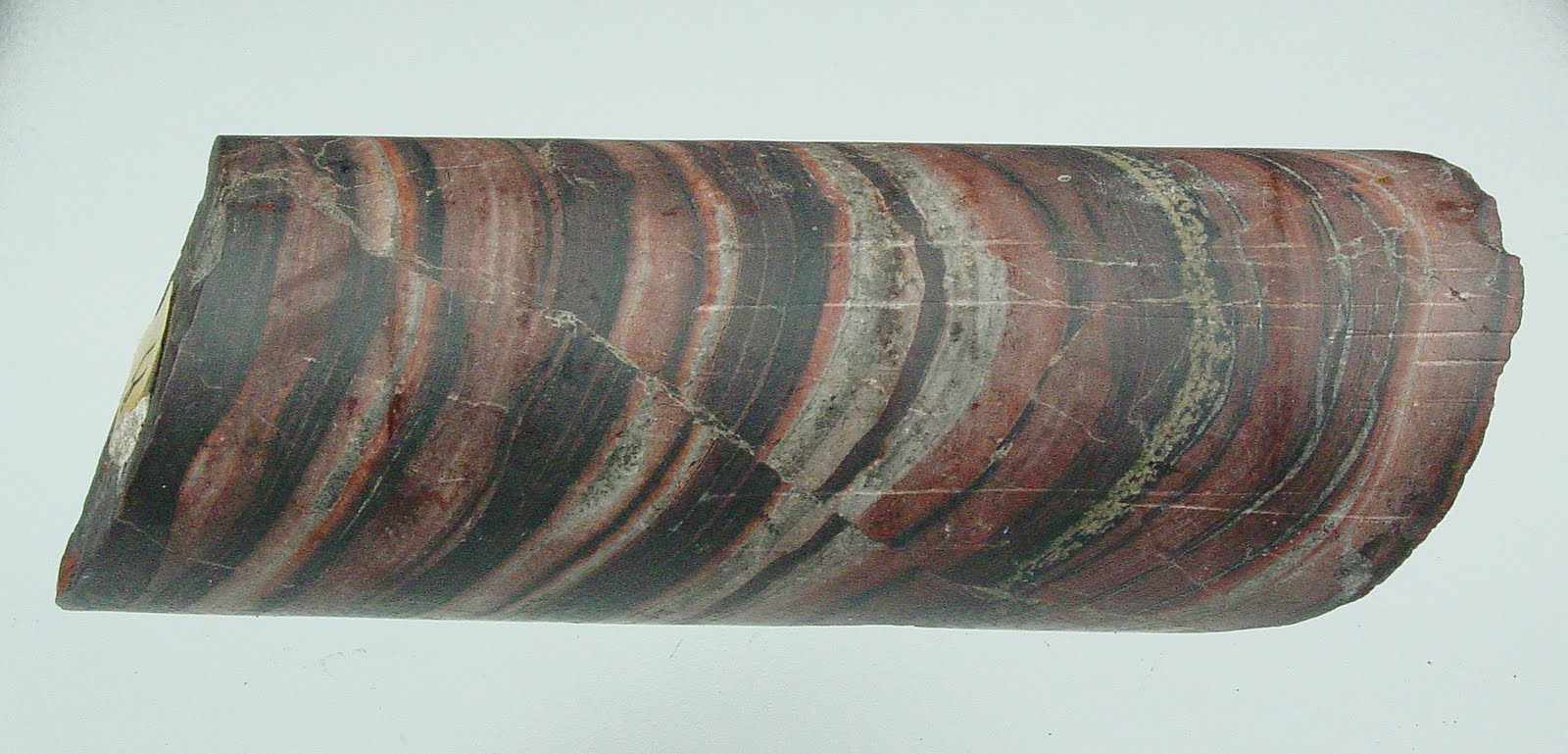
The picture in figure 2 below shows an excellent example of Banded-iron formation (BIF). Most BIFs are strikingly colourful with the dark layers being made up mainly of the iron oxide minerals, hematite (Fe2O3) and magnetite (Fe3O4) and red layers of jasper, a variety of chalcedony, or very fine-grained quartz (SiO2) (Mathez, 2006). BIFs are rocks of the Proterozoic Era ranging from 1.8 to 2.5 billion years in age and consist of alternating iron-rich and iron-poor layers, typically only millimeters to centimeters thick [2]. Banded iron formations are found throughout the geological record, but the period from 2.5 to 2.0 billion years represents a unique time in Earth history, a time during which 92% of the Earth’s BIFs were laid down (Immenhauser, 2005). For this enormous accumulation of iron oxide to have occurred over such a vast time span meant that something about the chemistry of early earth was very different to what it is today. The chemistry of rocks from the Proterozoic shows that oxygen was a rare gas in the atmosphere. The key to understanding the chemical reactions occurring in the early oceans is in the relationship between the elements oxygen and iron. Iron forms two ionic states, namely, ferrous (Fe+2) and ferric (Fe+3) – the +2 or +3 indicates the extent to which iron is oxidised. Iron will only dissolve in significant quantities in water that contains no oxygen (anoxic water). In anoxic water iron dissolves in the ferrous state as ions of hydrous Fe2+, or FeOH+ (Mathez, 2006). Therefore, in order for iron-rich chemical precipitates to form, the early oceans must have been sufficiently anoxic to dissolve iron. Since the ocean and atmosphere exchange oxygen rapidly, the atmosphere could not have contained much oxygen, either. But oxygen was in the making; photosynthesis from blue-green bacteria dominating the early oceans would have created a net gain of oxygen first in the ocean and later in the atmosphere (Attenborough, 2010). Ferrous iron in oceanic water scavenged oxygen that was a waste product for the photosynthesising bacteria and rained down onto the ocean floors as rust coloured chemical sediment. This was chemistry on a grand scale – the soluble ferrous iron was being oxidised to insoluble ferric iron as the minerals, magnetite and hematite. At the same time, primitive photosynthetic blue-green algae were beginning to proliferate near surface waters. As the algae would produce molecular oxygen (O2) as a waste product of photosynthesis, this free oxygen would combine with the iron in solution to form iron oxides. “As the biomass expanded beyond the capacity for the available iron to combine with waste O2, the oxygen content of the sea water rose to toxic levels for the algae population and resulted in their large-scale die-off, which in turn gave rise to an iron poor layer of silica on the sea floor” [2.]. As time passed and algae populations re-established themselves, a new iron-rich layer began to accumulate on ocean floors. This cycle was repeated and continued for hundreds of millions of years. “Each band in the iron formation is similar to an annual layer of sediment – or varve - to the extent that the banding is assumed to result from cyclic variations in available oxygen” (Kirschvink, 1992). For over 2 billion years this went on, until the iron in earth’s oceans was depleted. Since there was no iron left in solution the excess molecular oxygen bubbled up into the atmosphere and began accumulating from about 1700 million years ago, after two-thirds of Earth history [6.]. The vast layers of iron minerals stayed behind in the Banded-iron formations. The rise in the levels of oxygen after the massive depletion of iron meant that photosynthesising bacteria would face near extinction as oxygen is a reactive and highly toxic gas (Southwood, 2003). Cells would have to adapt to this change in environment and the excess oxygen would ultimately lead to the formation of an ozone layer and the proliferation of new life forms in an oxygenated world during the so-called “Cambrian Explosion”. But that is the subject of another article! Banded-iron formations occur in many parts of the world and constitute the major reserves of iron ore. At Thabazimbi and Sishen these reserves are exploited by major mining operations.


Figure 1: Core sample (8 cm) of Banded iron-formation from Hamersley, Australia. A fault runs through the center of the specimen showing the displacement of the individual layers of banding. Specimen and photograph: A. Fraser


Figure 2: Banded iron-formation (6 cm). Banded iron-formation is composed of alternating layers of iron-rich material and silica (chert), N’chwaning II mine, Kalahari Manganese Field. Each layer is relatively thin, varying in thickness from about a millimetre up to a few centimetres. This is evidence of aerobic life altering the early earth’s atmosphere by the precipitation of iron oxides. Specimen and photograph: A. Fraser


Figure 3: Banded iron-formation (10 cm). Banded iron-formation is composed of alternating layers of iron-rich material, Northern Cape,, South Africa. Specimen and photograph: A. Fraser


Figure 4: Banded iron-formation (14 cm). Banded iron-formation is composed of alternating layers of iron-rich material, Thabazimbi, South Africa. Specimen and photograph: A. Fraser


Figure 5: Mining activity at the Thabazimbi iron ore mine. Photograph by A.Fraser


References:
1. Attenborough. D., (2010). “First Life” Harper Collins publishers, ISBN 978 0007365241. (page 46)
2. “Banded Iron Formation” http://jersey.uoregon.edu/~mstrick/RogueComCollege/RCC_Lectures/Banded_Iron.html (accessed Dec 27, 2010)
3. Kirschvink, J. (1992). "Late Proterozoic low-latitude global glaciation: the Snowball Earth", in J. W. Schopf; C. Klein: The Proterozoic Biosphere: A Multidisciplinary Study. Cambridge University Press.
4. Mathez, E. (2006). “How Has the Earth Evolved? Evolution of the Atmosphere”
5. McCarthy, T. 2009. How on Earth? Answers to the puzzles of our planet. Struik Nature, Random House Struik (Pty) Ltd, Cape Town
6. http://www.amnh.org/learn/resources/earth_resource1.php (accessed Dec 27, 2010)
7. Southwood. R., (2003) “The Story of Life” Oxford University Press (Pages 22- 24).

Monday, December 6, 2010

What Makes a Good Analytical Chemist?

What makes a good analytical chemist? This was a question I was asked recently while giving a course on method validation. The question was somewhat of a challenge to answer ‘off the cuff’, however, it lead to an interesting excercise amongst the course delegates and to the formulation a number of attributes that would make a good analytical chemist. These include; intellectual curiosity, a passion for science, self-confidence, solid work ethic, drive, committment, good time management, perseverance, determination, patience, self-motivated and a strong desire to succeed. Additionally it was felt that a good analytical chemist needs to work and think independently, work well with others and be a good problem solver and understand that problem solving is a process, not something memorised. A few days later, after some deliberation I added to the list of attributes and believed that a good analytical chemist needs to be knowledgeable in all areas of chemistry, and able to integrate their knowledge across all areas of science, within and beyond chemistry. Good quantitative and reasoning skills and an ability to grasp difficult concepts and reduce them to an understandable foundation I feel are vital attributes. As we all know problems arise in the laboratory and a good analytical chemist needs to be an excellent problem solver. Communication in terms of good oral and written communication skills is vital as the analyst needs to be able to articulate their knowledge and thought processes to others. I’d be happy to hear your views!

Sunday, November 7, 2010

Fossil Collecting in Italy

By Allan Fraser


On an annual basis my wife and I take our holidays in Italy and this year was no exception. On our way to the Euro Mineral Show in Turin, we spent a few days in the the Piedmont area near the town of Asti enjoying the good food and exceptional wines. Besides being a country of immense beauty one also gets a deep sense of the human history when visiting Italian cities and travelling through the countryside. Most Italian cities are built on Roman foundations and Roman roads are still used to a large extent today. But human history is but one ancient part of Italy. About 2 - 5 million years ago, most of the low-lying regions of Italy were covered in a shallow warm sea. The evidence of this ancient sea can be found in many regions of Italy as inland beach sands, clays and other marine rocks along with a variety of marine fossils. In the northwest region of Italy, particularly in the Piedmont area, ancient beach sands dominate the landscape having formed small round hills.

Whilst visiting a guest farm near the town of Asti in Piedmont we discovered a cliff made of this ancient beach sand and we were amazed to see numerous fossil shells protruding from the compacted sand. We were able to extract several of these fossils which were easy to clean of the sand to expose the fossilised shells. We collected about a dozen and left those behind that were not complete or showed some damage. Later a literature search indicated that the shells we had found were of the species Pecten Nigromagnus and those they had lived about 3 to 5 million years ago during what Earth Scientists call the Pliocene period. I took pictures of the fossils (shown here) before donating them to the Piedmont Paleontological Society.


Thursday, September 16, 2010

Self-Evaluation - A Desirable Philosophy for the Analytical Chemist

A good analyst continually tempers his or her confidence with doubt. Such doubt leads stimulates a search for new and different methods of confirmation for reassurance. Frequent self-appraisals should embrace every step – from collecting samples to the reporting of results.

The analyst’s first critical scrutiny should be directed at the entire sample collection process in order to guarantee a representative sample for the purpose of the analysis and to avoid any possible losses or contamination during the act of collection. Attention should also be given to the type of container and to the manner of transport and storage.

A periodic assessment should be made of the available analytical methods, with an eye to applicability for the purpose and the situation. In addition, each method selected must be evaluated by the analyst for sensitivity, precision and accuracy, because only inn this way can he determine whether he has interpreted the directions properly. Self-evaluation on these points can give the analyst confidence in the value and significance of his reported results.

Saturday, July 17, 2010

Here are a few of my favourite quotes by the late great American astronomer, Carl Sagan (1934-1996).


"Modern science has been a voyage into the unknown, with a lesson in humility waiting at every stop. Many passengers would rather have stayed home"

Carl Sagan, Pale Blue Dot


"The method of science is tried and true. It is not perfect, it's just the best we have. And to abandon it with its skeptical protocols is the pathway to a dark age"
-- Carl Sagan

"For years I've been stressing with regard to UFOs that extraordinary claims require extraordinary evidence"
-- Carl Sagan, quoted from Billions and Billions, chapter 5 ("Four Cosmic Questions"), page 49

"If some good evidence for life after death were announced, I'd be eager to examine it; but it would have to be real scientific data, not mere anecdote.... Better the hard truth, I say, than the comforting fantasy"-- Carl Sagan, The Demon-Haunted World, page 204

Friday, March 26, 2010

Minerals from Peru - new additions to my Mineral Collection!

Bournonite after Tetrahedrite with Quartz (~7 cm) from a new find at Mundo Nuevo mine


A large manganoan calcite crystal with pyrite on tetrahedrite. From the famous Casapalca mine


Orange orpiment with barite, Quirivilca mine


A large Manganoan Calcite ~13 cm with calcite and sphalerite from Racrachanca mine.


Purple Coquimbite (~6 cm) from Peru


Sphalerite with calcite (~8 cm) from Ticlio mine


These are a number of new mineral specimens added to my growing collection of minerals from the country of Peru. The new bournonite pseudomorph after tetrahedrite from Mondo Nuevo specimens are particulary intruiging and are just one of many fascinating pseudormorphs from Peru. The Sphalerite with calcite specimen from Ticlio mine has to be one of my favourites. There is a "shelf" of fine calcite in the center of the specimen that has several spheres of sphalerite on the shelf. The sphalerite have a dark blue iridescence which makes the entire specimen especially attractive!


Allan